
Kumbh knowledge
Why is Haridwar important to the Kumbh Mela?
By Divanshu Garg · Article author · Last updated 23 Nov 2026
Haridwar matters to the Kumbh Mela because Hindu tradition connects the city with the Ganga and the story of the sacred pitcher of amrit. Har Ki Pauri is central to that belief. Understanding the river, the akhadas and the difference between religious tradition and travel arrangements makes a first visit more meaningful.
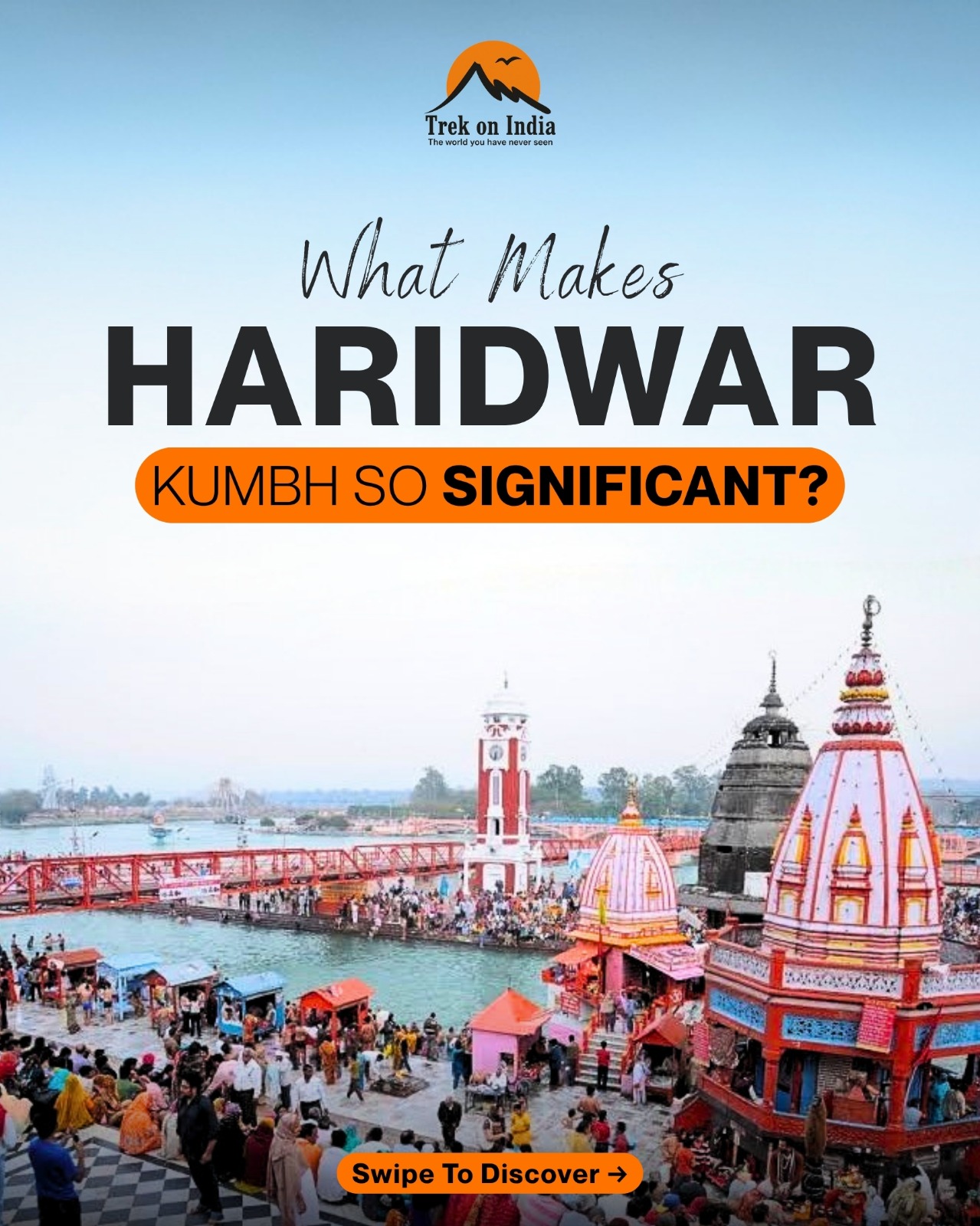
What does the word Kumbh mean?
Kumbh means a pitcher or pot. In the religious narrative associated with the festival, it is the vessel containing amrit, the nectar of immortality, that emerges during the samudra manthan, or churning of the ocean. This is a sacred account within Hindu tradition, not an archaeological explanation of the gathering.
The story connects Haridwar, Prayagraj, Ujjain and Nashik with places where drops of amrit are believed to have fallen. Each host city has its own river setting and local customs. Calling every gathering identical misses that local character: a Haridwar visit is shaped by the Ganga, its ghats and the city's pilgrimage traditions.
For a visitor, the useful distinction is between meaning and logistics. The religious reason for bathing does not tell you where a vehicle can stop, whether a particular ghat is open or when your group may enter. Those are operational questions, answered by the mela administration and current local instructions.
Why do pilgrims gather at Har Ki Pauri?
Har Ki Pauri is one of Haridwar's principal sacred ghats, and Brahma Kund is traditionally associated with the drop of amrit. Incredible India describes Haridwar as an entryway to God, at the foothills of the Shivaliks, where the river and pilgrimage traditions are closely connected.
The setting is not just a backdrop for photographs. People come to bathe, pray, make offerings and sit beside the river. The evening Ganga aarti is a separate ritual from the Kumbh's ceremonial bathing processions. You can appreciate both without assuming that watching one gives access to the other.
A meaningful visit need not involve standing at the busiest edge of the water. Follow the assigned pedestrian route and the directions at the ghat. If the main area is restricted, accept the arrangement rather than treating a particular viewpoint as something you have paid to secure.
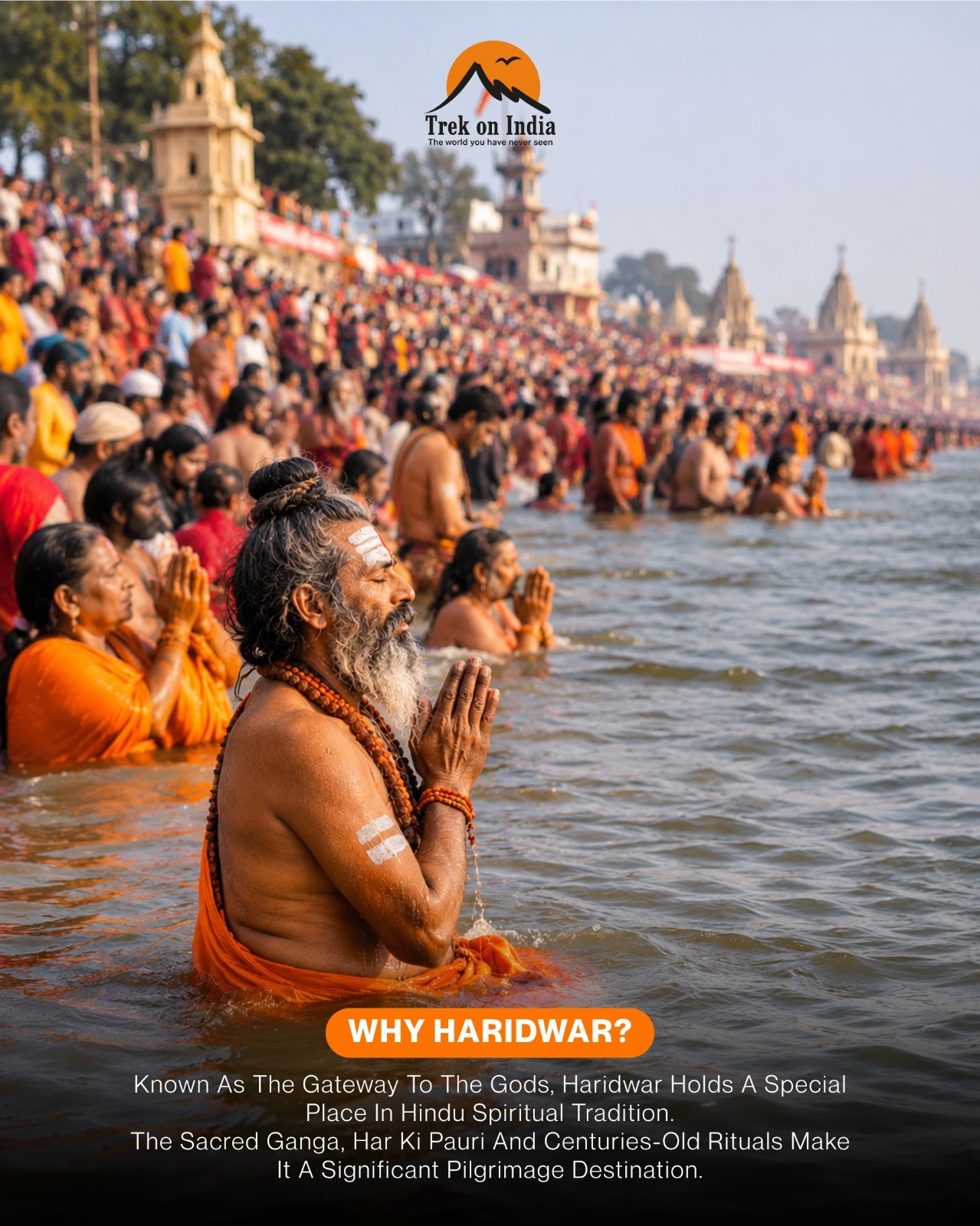
What roles do akhadas, satsang and sewa play?
Akhadas are religious communities that help carry the Kumbh tradition, while satsang offers spiritual discourse and sewa means service. UNESCO's description includes ascetics, saints, sadhus, kalpavasis and visitors, and recognises the transmission of knowledge through teachers, oral traditions and texts.
The mela is therefore more than a single bath. People may attend a discourse, meet a teacher, take part in prayer or serve food. These activities belong to particular communities and organisers. Ask before joining a camp, recording a talk or photographing someone; a public gathering does not remove the need for permission.
Do not expect every sadhu to provide an explanation or pose for a portrait. Some are observing silence or following their own practice. Watching respectfully from an appropriate place is participation enough. Donation requests, camp access and event schedules should be clarified directly with the relevant organiser.
| Experience | Meaning | Visitor consideration |
|---|---|---|
| Snan | Ritual bathing | Use permitted bathing areas |
| Akhada procession | Ceremonial religious movement | Keep the route clear |
| Satsang | Spiritual discourse or gathering | Ask about entry and recording |
| Sewa | Service to others | Confirm the organiser and arrangements |
| Ganga aarti | Offering of light to the river | Follow local crowd instructions |
Is Haridwar 2027 a Maha Kumbh or an Ardh Kumbh?
The 2027 Haridwar gathering is commonly described as Ardh Kumbh in the traditional cycle, while current state communications use Haridwar Kumbh 2027. Our website's Maha Kumbh navigation names the Haridwar offering; it should not be confused with the 2025 Prayagraj gathering or a different host city.
When researching, check the city and year before using any calendar, route map or accommodation advertisement. A page about Prayagraj may describe a different river, station or ceremonial arrangement. Even information from an earlier Haridwar mela is historical context, not evidence that the same access rules will apply in 2027.
This article explains the tradition rather than declaring bathing times. Detailed dates, processions and local movement rules need current confirmation. An announced festival day is not automatically a personal appointment at a ghat, and an operator cannot replace the administration's directions.
For the Haridwar-specific services and planning context, use the Haridwar Kumbh Mela 2027 hub.
What can we share from our trips and Kumbh planning?
From our trips: the first-hand information supplied for this project concerns Trek on India's own ghat plans, VIP sewa, itineraries and special snan arrangements with sadhus. These are operator planning details, not a report from the future 2027 mela. No attendance figures, leader anecdotes or guaranteed ceremonial access are implied here.
Ask for the exact location, permitted access, named coordinator and written inclusions before choosing an assisted visit. A service described as VIP should explain the practical assistance it provides. It should not suggest that a religious blessing, a meeting with a sadhu or exemption from public safety rules is guaranteed.
Discuss the actual location and access through our Kumbh ghat guidance. For another pilgrimage season, Trek on India's Himalayan treks and yatras include the Char Dham Yatra from Haridwar itinerary; check its published year and current departures rather than assuming it operates during the mela.
What should you read before deciding your next step?
Use the guide that answers your next practical question, rather than trying to settle the whole visit at once. Understanding the ritual, getting to Haridwar and choosing a workable stay are different decisions. Share the relevant guide with the people travelling with you so everyone agrees on the same plan.
For a closer look at Delhi to Haridwar Kumbh travel planning, use our dedicated guide. For a closer look at snan etiquette and akhada traditions, use our dedicated guide. For a closer look at Kumbh planning for families and elders, use our dedicated guide.
Frequently asked questions
Why is Haridwar one of the Kumbh cities?
Hindu tradition associates Haridwar with a drop of amrit from the sacred pitcher in the samudra manthan narrative. The Ganga and Har Ki Pauri are central to the city's pilgrimage identity. This is a statement of religious belief, not a claim that a particular bath or travel package guarantees a spiritual outcome.
Is Kumbh Mela recognised by UNESCO?
Yes. UNESCO inscribed Kumbh Mela on the Representative List of the Intangible Cultural Heritage of Humanity in 2017. That recognition concerns the living tradition and the knowledge carried by its communities. It is not accreditation of an individual tour operator, camp, hotel or commercial service sold for the mela.
Are Ganga aarti and Amrit Snan the same ritual?
No. Ganga aarti is an offering of light to the river, while snan is ritual bathing. Amrit Snan refers to ceremonial bathing associated with akhadas on designated occasions. Their locations, access and crowd arrangements can differ, so attending the aarti does not establish permission to join an akhada procession or bath.
Can a first-time visitor attend without bathing?
A visit can focus on prayer, observing traditions and understanding the gathering without entering the river. Follow the access rules for each area and ask before joining camp activities. If bathing is unsuitable for your health or mobility, do not let a travel schedule pressure you into taking a dip.
How should I read information labelled Maha Kumbh 2027?
Check that the page refers to Haridwar, Uttarakhand, and the 2027 gathering. Ardh Kumbh is the traditional description commonly used for this cycle, and state communications also use Haridwar Kumbh 2027. Do not copy routes or ceremonial information from Prayagraj 2025, Nashik or an earlier Haridwar event into your plans.
Sources and scope
- UNESCO, Kumbh Mela, Representative List of the Intangible Cultural Heritage of Humanity, inscribed in 2017
- Incredible India, Haridwar destination guide
- Uttarakhand Department of Information and Public Relations, Haridwar Kumbh 2027 announcement, 12 Oct 2026
Reference graphics supplied by Trek on India are illustrative, not photographs of the future 2027 event. Confirm current access and service arrangements before travelling.